Introduction
Selling on Myntra can be genuinely profitable, but it’s also less forgiving than platforms like Amazon or Flipkart when it comes to small operational mistakes. Myntra is a curated, fashion-first marketplace — inconsistent brand details, non-compliant images, or a neglected Q&A section don’t just look sloppy, they actively cost visibility and can trigger account penalties.
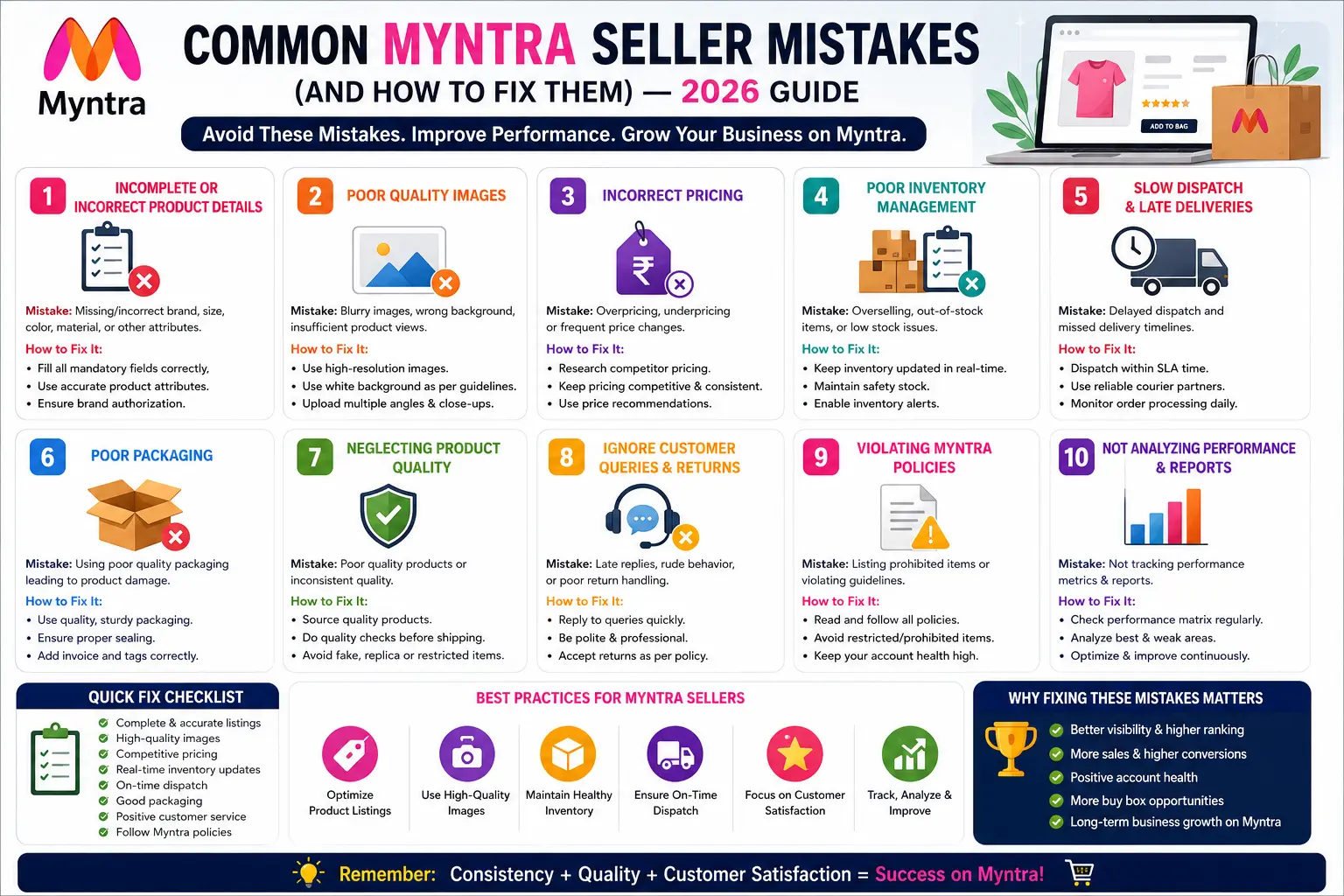
This guide covers the common Myntra seller mistakes that come up again and again, with practical fixes for each one — and a system for catching them before they compound.
Mistake 1: Inconsistent Brand and Business Details
The problem: Your brand name, GSTIN, business address, or support contact details don’t match exactly across your Seller Portal, your invoices, and your GST certificate. Even small inconsistencies — an abbreviation here, a missing suffix there — can flag your account during compliance checks.
The fix: Do a full details audit in your Seller Dashboard’s business settings and cross-check every field against your official documents. This is worth doing quarterly, not just once at onboarding, since details can drift as your business evolves (a registered address change, an updated GST certificate) without anyone remembering to update the Seller Portal to match.
Mistake 2: Non-Compliant Product Images
The problem: Images that don’t meet Myntra’s resolution, background, or format requirements are one of the most common causes of listing rejection. Myntra is a highly visual, fashion-focused platform, so image quality gets scrutinized more closely here than on most other marketplaces.
The fix: Always check the current Image Guidelines under Seller Resources before a bulk upload — exact resolution and format requirements can change, so relying on guidance from months ago is a real risk. As a general standard: clean white-background main images, genuine lifestyle or model shots as secondary images, and consistent, watermark-free presentation across your whole catalog. A batch editing workflow (rather than manually resizing one image at a time) saves real time once your SKU count grows.
Mistake 3: Generic Product Titles and Missing Attributes
The problem: Titles like “Shirt Blue” with no brand, material, or fit details get buried in search. Myntra’s discovery relies heavily on structured attributes, not just keyword matching in a title.
The fix: Use a consistent title formula — Brand + Product Type + Key Feature + Size/Color — and fill in every attribute field: material, gender, occasion, and care instructions. Incomplete attributes don’t just hurt discoverability; they also make your listing harder for shoppers to trust at a glance, since fashion buyers specifically look for exactly this kind of detail before purchasing something they can’t physically touch.
Mistake 4: Poor Inventory and Pricing Discipline
The problem: Stock-outs during high-traffic periods and erratic pricing swings both damage seller ratings and buyer trust. On a platform with a heavy promotional calendar (End of Reason Sale, festive drops), being caught unprepared is a recurring, avoidable failure.
The fix: Set low-stock alerts well before you actually run out, review inventory reports weekly rather than monthly, and keep pricing changes gradual and defensible rather than reactive. If you’re planning around Myntra’s major sale events, build buffer stock ahead of time instead of scrambling once a sale has already started.
Mistake 5: Ignoring Reviews and Customer Questions
The problem: Unanswered questions and unaddressed negative reviews quietly erode both your reputation and your click-through rate — shoppers browsing a category page are comparing sellers, and a listing with ignored complaints reads as a red flag.
The fix: Check reviews and Q&A on a genuine daily cadence, not sporadically. Respond to negative reviews quickly with a real resolution offer rather than a generic apology, and keep your most common questions answered and visible near the top of the listing so shoppers aren’t left guessing.
Mistake 6: Treating Myntra Like a Generic Marketplace
The problem: Sellers who’ve succeeded on Amazon or Flipkart sometimes bring the same playbook to Myntra and underperform, because Myntra is curated and visually driven in a way those platforms aren’t. A listing that would pass fine on a general marketplace can look amateurish on a platform where shoppers expect editorial-quality presentation.
The fix: Study how established brands present themselves on Myntra specifically — the photography style, the copy tone, the overall visual consistency — and treat your storefront more like a boutique retail presence than a generic product feed.
Mistake 7: Spreading Thin Across Every Promotional Event
The problem: Sellers who’ve succeeded on Amazon or Flipkart sometimes bring the same playbook to Myntra and underperform, because Myntra is curated and visually driven in a way those platforms aren’t. A listing that would pass fine on a general marketplace can look amateurish on a platform where shoppers expect editorial-quality presentation.
The fix: Study how established brands present themselves on Myntra specifically — the photography style, the copy tone, the overall visual consistency — and treat your storefront more like a boutique retail presence than a generic product feed.
Mistake 8: Inaccurate or Missing Size Charts
The problem: Size mismatch is one of the single biggest drivers of returns in fashion e-commerce, and a generic or missing size chart makes it worse — shoppers guess, guess wrong, and send the item back. Every return costs you both the reverse shipping and a dent in your return-rate metrics.
The fix: Build size charts specific to each product type rather than reusing one generic chart across your whole catalog — a fitted shirt and an oversized hoodie shouldn’t share sizing logic. Where possible, include real body measurements alongside size labels (S/M/L), since labels alone vary meaningfully between brands and confuse shoppers comparing options.
Mistake 9: Slow Order Dispatch
The problem: Delayed dispatch doesn’t just risk missing SLA windows — it directly affects account health scoring, and repeated delays quietly push your listings down in search ranking regardless of how good the listing itself is.
The fix: Treat dispatch time as a core operational metric, not an afterthought. If delays are a recurring pattern rather than an occasional exception, the fix is usually process, not effort — batching fulfillment at set times daily, rather than handling orders reactively throughout the day, tends to close most of the gap.
Mistake 10: Underinvesting in Packaging
The problem: Damaged-in-transit complaints and poor unboxing experiences both generate returns and hurt reviews — and on a platform where visual presentation matters as much as it does on Myntra, packaging is effectively part of your brand’s first impression, not just protection for the product.
The fix: Invest in packaging that protects the product adequately for your specific category (fabric needs different protection than footwear or accessories) and reflects your brand’s presentation standard, not just the cheapest option that technically survives shipping.
Mistake 11: Not Reviewing Return Data for Patterns
The problem: Most sellers see returns as a cost to absorb rather than data to act on. A specific SKU with a consistently high return rate is telling you something — a sizing issue, a misleading photo, a quality problem — and ignoring that pattern means paying the same cost repeatedly instead of fixing it once.
The fix: Review return reasons by SKU monthly, not just overall return rate. If one product is driving a disproportionate share of returns, treat it as a signal to fix the listing, the size chart, or the product itself — not as random noise.
Mistake 12: Underusing Myntra's Promotional and Ad Tools
The problem: Sellers who rely purely on organic visibility are leaving reach on the table, especially newer sellers or newer SKUs that haven’t built up enough sales history to rank well organically yet.
The fix: Use Myntra’s available promotional and advertising tools deliberately around product launches and your prioritized sale events (see Mistake 7), rather than either ignoring them entirely or spreading a small budget too thin across everything. For strategy specific to growing visibility and sales rather than just fixing operational mistakes, our Myntra Sales Boost approach goes deeper into this than a mistakes-focused guide like this one can.
Build a Weekly Account Health Routine
Individually, none of these fixes take much time. The real failure point is inconsistency — fixing an issue once and letting it drift again a few months later. A simple weekly routine covers most of what’s above: check inventory levels and reorder points, review return data by SKU, respond to any unanswered reviews or questions, and confirm dispatch times are on track. Monthly, add a broader details audit and a size-chart/image-compliance spot check across a sample of your catalog. This isn’t about perfection — it’s about catching drift early, before a small inconsistency compounds into a rating drop or a rejected catalog update.
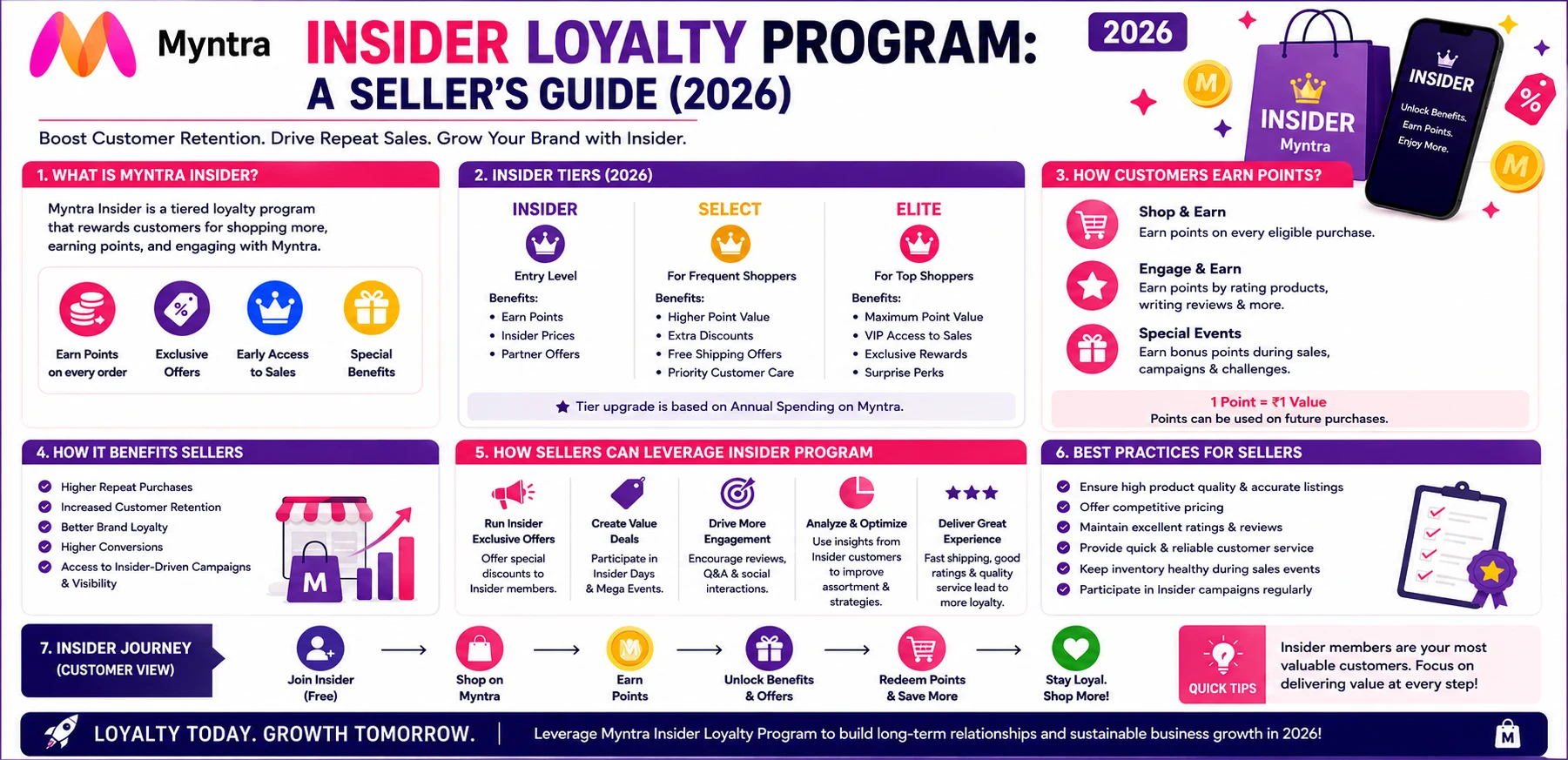
If you’re newer to the platform, it’s also worth reviewing your Myntra onboarding setup itself — several of the mistakes above (business details, image standards) are far easier to get right at onboarding than to retrofit later across a live catalog. And if loyalty-driven repeat buyers are part of your growth strategy, our piece on Myntra’s Insider loyalty program covers how seller behavior connects to that audience specifically.
Final Thoughts
None of these Myntra seller account mistakes are individually complicated to fix — the challenge is catching them consistently rather than occasionally. A quarterly details audit, a genuine daily habit around reviews and Q&A, and treating image, size chart, and packaging quality as an ongoing standard rather than a one-time setup task will resolve most of what quietly holds sellers back on this platform.
Instead of juggling all of this yourself, Sell Technical experts can take the reins — from profile compliance and image standards to inventory management and review engagement — so you can focus on your core business. Our Myntra account management and Myntra listing services cover exactly this.
Book a free consultation → or call +91 8882080135.
FAQs - Common Myntra Seller Mistakes
What's the most common reason Myntra listings get rejected?
Non-compliant images are typically the leading cause — Myntra enforces stricter visual standards than most general marketplaces given its fashion-first, curated positioning.
How often should I audit my Myntra seller account details?
At minimum quarterly, and immediately after any change to your business address, GST registration, or brand name — inconsistencies here can trigger compliance flags.
Can inconsistent pricing actually get my Myntra account penalized?
Erratic or aggressive pricing swings can affect your seller rating and buyer trust. Exact policy thresholds can change, so it’s worth confirming current pricing guidelines directly with your account manager rather than relying on a fixed rule of thumb.
How quickly should I respond to negative reviews on Myntra?
As quickly as realistically possible — same-day response with a genuine resolution offer is a strong standard, since delayed responses compound the reputational damage of the original review.
Should I participate in every Myntra sale event?
Not necessarily. Spreading inventory and marketing budget across every minor promotion often performs worse than concentrating your best resources on the handful of flagship events most relevant to your category.
How much do inaccurate size charts actually affect returns?
Size mismatch is widely recognized as one of the leading causes of returns in fashion e-commerce specifically — a product-specific, measurement-based size chart meaningfully reduces this compared to a generic S/M/L label alone.
Does slow dispatch really affect my search ranking?
Yes — dispatch delays factor into account health scoring, which in turn affects how your listings are surfaced in search, independent of how well the listing itself is optimized.