Introduction
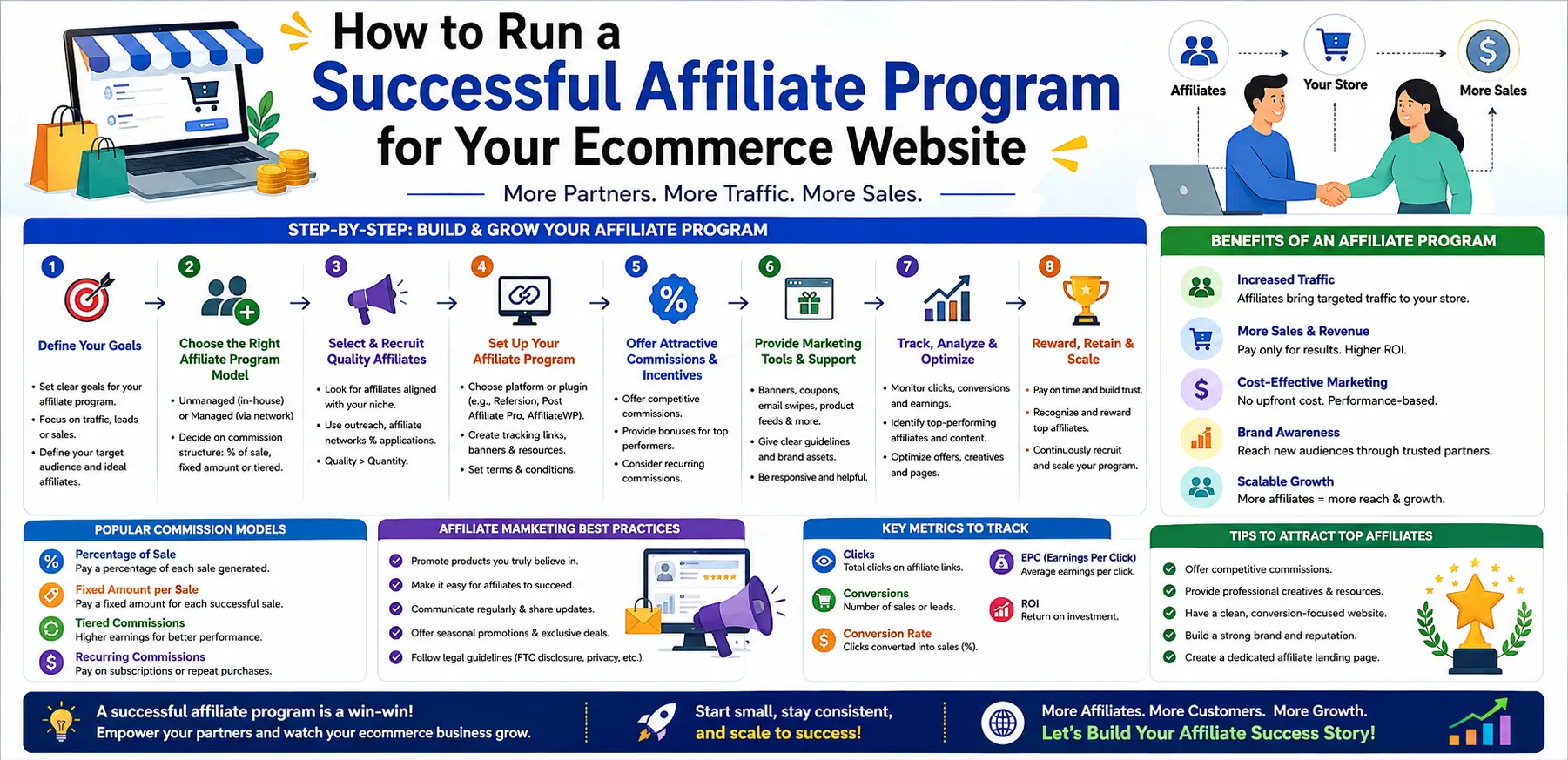
At some point, most ecommerce store owners hit the same wall: ad costs keep climbing, and every new customer is getting more expensive to acquire. An ecommerce affiliate program is one of the few growth channels where you only pay when a sale actually happens — you’re recruiting a small army of bloggers, influencers, and content creators who promote your products in exchange for a commission, and you only pay out once they deliver a result.
The catch is that a badly set-up affiliate program can turn into a lot of admin work for very little return. This guide walks through how to build one that actually performs — platform choice, commission structure, recruitment, and the fraud-prevention basics most beginners skip until it costs them.
I. Choose the Right Affiliate Platform
II. Define Your Commission Structure
Cookie duration matters more than most first-time program owners expect. Thirty days is standard, but if your buying cycle is longer — think furniture, appliances, or anything people research before purchasing — a 60 to 90 day window can meaningfully boost conversions credited to your affiliates. The trade-off is more exposure to “last-click” disputes, where multiple affiliates end up claiming credit for the same eventual sale.
III. Recruit and Onboard Affiliates
IV. Give Affiliates Creative Assets Worth Using
V. Track, Monitor, and Optimize Ongoing Performance
Simple A/B tests — a double-commission weekend, for instance — can reveal a lot about what actually motivates your specific affiliate base to push harder. And regular communication matters more than most program owners assume: a monthly newsletter highlighting top performers, new product launches, and quick optimization tips keeps your program top-of-mind for affiliates who are juggling promotions for multiple brands at once.
VI. Prevent Fraud and Protect Your Brand
Make a habit of reviewing payout requests and your highest-volume affiliates periodically. A sudden spike in an affiliate’s sales, especially with an unusually high refund or cancellation rate attached, is worth a closer look before the next payout goes out.
Getting Started
- Choose and configure your affiliate platform or plugin
- Define and publish your commission structure and recruitment page
- Actively recruit your first affiliates instead of waiting for them to find you
- Provide creative assets, track performance closely, and keep optimizing based on what the data actually shows
Done well, an affiliate program becomes one of the more cost-efficient growth channels available — you’re only paying for results that already happened, not for the possibility of one.
Need Help Building Your Growth Strategy?
Running an affiliate program well takes ongoing management, not just a one-time setup. If you’d rather focus on your product while experts handle the strategy, Sell Technical can help with the broader growth picture:
- SEO & SMO Optimization — build sustainable organic traffic alongside your affiliate channel
- Website Development — make sure your site is built to convert the traffic affiliates send your way
- CRM System — manage affiliate and customer relationships in one place
Frequently Asked Questions
How much commission should I offer affiliates?
It varies by industry and margin, but 5–10% is a common starting range for most ecommerce products. Higher-ticket or high-margin items can sometimes support flat-rate bonuses on top of a base percentage to attract stronger affiliates.
What's the best affiliate platform for a small ecommerce business?
Self-hosted plugins like AffiliateWP work well for smaller stores that want lower recurring costs and are comfortable handling recruitment themselves. Larger stores with more budget often prefer hosted networks for the built-in publisher pool and reduced admin overhead.
How do I recruit affiliates for my online store?
Start with your existing customers and social audience, then reach out directly to niche bloggers and influencers in your product category rather than waiting passively for sign-ups through your affiliate landing page.
How long should my affiliate cookie duration be?
Thirty days is standard for most products. Consider extending to 60–90 days if your customers typically take longer to decide before purchasing.
How do I prevent affiliate fraud?
Use CAPTCHA on sign-up forms, monitor for unusual click or IP patterns, set clear brand guidelines around prohibited tactics like coupon arbitrage, and periodically review high-volume affiliates before processing payouts.