Reviewed by the Sell Technical team — we handle SEO for online stores alongside marketplace account management, so we see both sides of the traffic equation.
Introduction
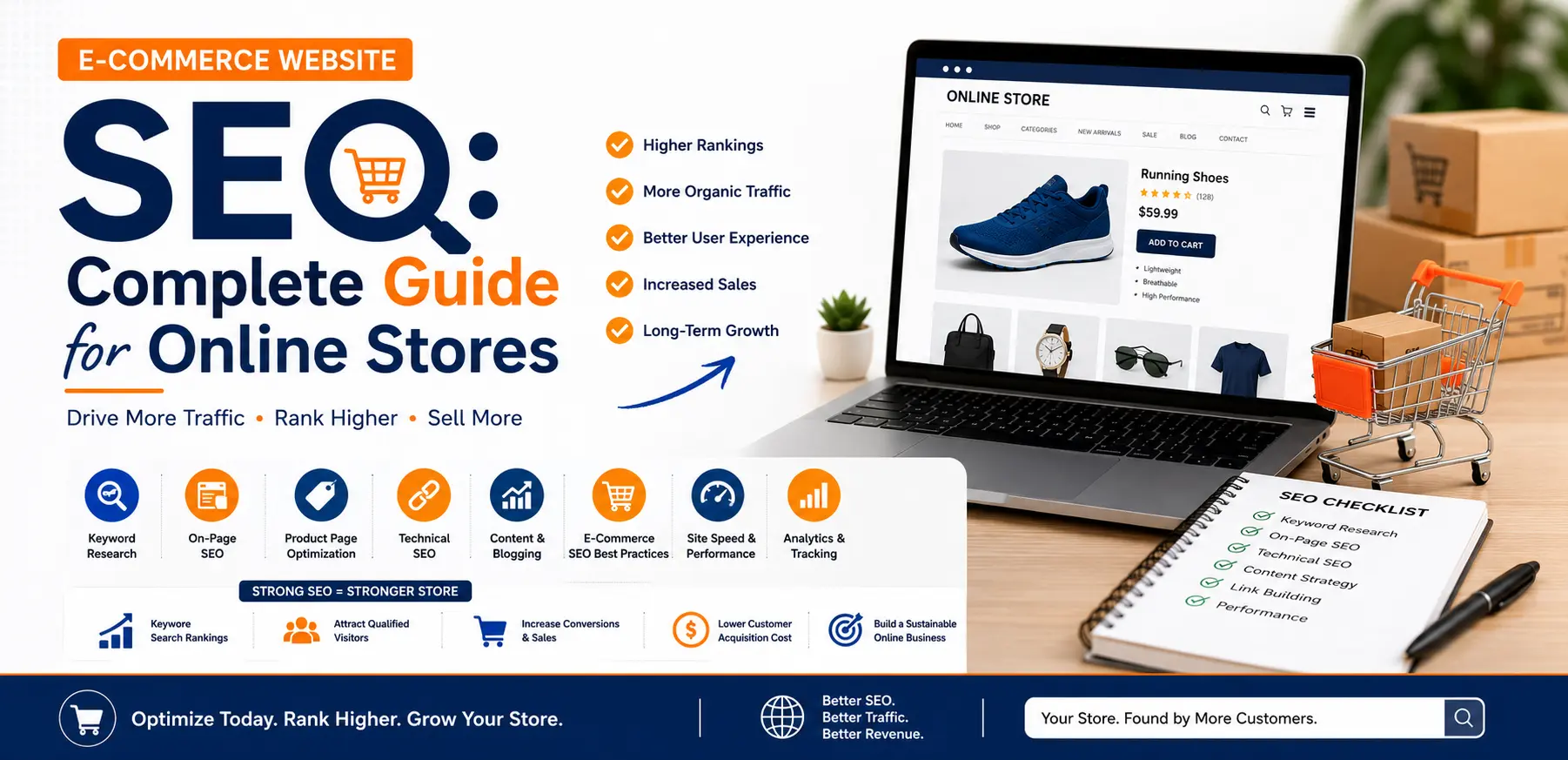
Search engine optimization is one of the most profitable growth channels an online store has. Unlike paid ads, e-commerce website SEO delivers consistent, high-intent traffic without recurring ad spend — provided your store is actually structured to earn it, which is where most stores fall short.
This guide covers how e-commerce SEO really works in 2026: keyword strategy, on-page and technical fundamentals, structured data, visual and local SEO, and how your website’s SEO connects to the marketplace listings you may already be running elsewhere. By the end, you’ll have a complete picture, not just a checklist.
What Is E-Commerce SEO?
E-commerce SEO is the process of optimizing an online store so its category pages, product pages, and supporting content rank higher in search engines for relevant keywords.
Unlike blogs or service websites, e-commerce SEO focuses heavily on:
- Product discovery
- Category-level rankings
- Transactional search intent
- Technical performance
- Conversion optimization
The goal is simple: bring buyers, not just traffic.
Why SEO Is Critical for E-Commerce Websites
Paid ads stop the moment you stop spending. SEO, when done right, compounds over time — a well-optimized category page can keep bringing in orders eighteen months after you last touched it.
Key benefits of e-commerce SEO:
- Higher organic product visibility
- Lower customer acquisition cost
- Long-term traffic growth
- Increased trust and brand authority
- Better conversion rates from high-intent searches
Most online stores fail at SEO not because SEO doesn’t work — but because it’s implemented incorrectly. We see the same handful of mistakes repeatedly: technical issues left unfixed for months, category pages treated as an afterthought, and product descriptions copied straight from supplier catalogs.
How E-Commerce SEO Is Different from Normal SEO
| Regular SEO | E-Commerce SEO |
| Blog-focused | Product & category-focused |
| Few pages | Hundreds or thousands of URLs |
| Informational intent | Transactional intent |
| Simple structure | Complex site architecture |
Keyword Research for E-Commerce Websites
Keyword research is the foundation of any e-commerce SEO strategy. Focus on three keyword types:
Product Keywords — e.g. “buy running shoes online,” “wireless earbuds price.” These convert directly.
Category Keywords — e.g. “men’s running shoes,” “wireless audio accessories.” These bring high-volume traffic
Informational Keywords — e.g. “best running shoes for beginners,” “how to choose earbuds.” These build authority and funnel readers toward product pages.
Each keyword group should map to a specific page type — product keywords to product pages, category keywords to category pages, informational keywords to blog content. Mixing them randomly across page types is one of the most common reasons stores plateau despite steady content output.
E-Commerce Website Structure & SEO
Best practices:
- Keep important pages within 3 clicks of the homepage
- Use clean, readable URLs
- Avoid duplicate category paths
- Use breadcrumb navigation
Poor structure is one of the most common reasons e-commerce sites fail to rank, even when the individual pages are well-written.
On-Page SEO for Product Pages
Product pages are where sales happen — and where SEO mistakes are most common.
Optimize product pages with:
- Unique product titles (not copied from suppliers)
- SEO-friendly meta titles & descriptions
- Detailed product descriptions (not 2-3 lines)
- Optimized images with descriptive alt text
- Internal links to relevant categories
- User reviews & ratings (both an SEO and trust signal)
Thin or duplicate product pages are a major ranking killer — if your descriptions are identical to what ten other stores selling the same supplier product are using, Google has no reason to prefer yours.
On-Page SEO for Category Pages
Category pages usually rank better than individual products, which is why they deserve just as much attention.
Category page optimization tips:
- Add 300-600 words of genuinely descriptive content
- Use H1 and H2s with natural keyword variations
- Add internal links to top products
- Optimize filters to avoid duplicate URLs
- Use SEO-friendly pagination
Well-optimized category pages drive scalable traffic — one strong category page can outperform dozens of individual product pages combined.
Schema Markup & Structured Data for E-Commerce
This is the piece most stores skip entirely, and it’s a mistake — structured data is how you tell Google exactly what’s on a page instead of hoping it figures it out.
The schema types that matter most for e-commerce:
- Product schema — price, availability, brand, and SKU, so your listings can qualify for rich results like price and stock status directly in search
- Review/AggregateRating schema — enables star ratings to appear next to your listing in search results, which measurably improves click-through rate
- Breadcrumb schema — reinforces your site structure for search engines and often improves how your URL path displays in results
- FAQPage schema — if a product or category page answers common questions, this markup gives you a shot at the FAQ rich result
Getting this right once, at the template level, means every product and category page benefits automatically — it’s one of the highest-leverage technical investments a store can make.
Technical SEO for E-Commerce Websites
Technical SEO is non-negotiable for online stores, and it’s the layer content alone can’t compensate for.
Core Web Vitals specifically matter more for e-commerce than almost any other site type, since Google uses them as a ranking factor and they directly affect cart abandonment:
- LCP (Largest Contentful Paint) — how fast your main product image or hero content loads. Slow LCP on a product page directly costs sales, not just rankings.
- INP (Interaction to Next Paint) — how responsive your site feels when someone taps “Add to Cart” or applies a filter. A sluggish filter experience on a category page is a quiet conversion killer.
- CLS (Cumulative Layout Shift) — whether elements jump around as the page loads. This is especially common on product pages with dynamically loading reviews or recommendation widgets.
Other key technical SEO elements:
- Secure HTTPS
- Proper canonical tags
- Optimized crawl budget
- XML sitemap for products & categories
If technical SEO is weak, strong content will still struggle to rank. This is exactly the kind of foundational work that should be handled during website development rather than patched in afterward.
Mobile SEO for Online Stores
Most e-commerce traffic is mobile, and Google indexes your mobile version first, not desktop.
Mobile SEO essentials:
- Responsive design
- Fast mobile load time
- Easy navigation & filters
- Thumb-friendly buttons
- Simplified checkout
A store that looks great on a desktop but is clumsy to browse on a phone is losing far more traffic than most owners realize.
Visual SEO: Why Product Photography Matters More Than You Think
Images do double duty on an e-commerce site — they influence whether someone buys, and they influence whether Google ranks the page at all.
What actually matters for image SEO:
- Descriptive, keyword-relevant file names (not jpg)
- Compressed file sizes so images don’t drag down your LCP score
- Genuine, unique product photography rather than reused supplier images, since duplicate images across dozens of competing stores dilute your page’s uniqueness signal
- Descriptive alt text for every product image, both for accessibility and for image search visibility
Stores that invest in original product photography tend to see two compounding benefits: better on-site conversion, and a genuine differentiation signal that helps their product pages stand apart from competitors using identical supplier photos.
Link Building for E-Commerce SEO
Content and technical SEO get most of the attention, but backlinks still carry real weight in how Google evaluates a domain’s authority.
Realistic link-building approaches for online stores:
- Digital PR around genuinely newsworthy product launches or company milestones
- Supplier and manufacturer partnership pages linking back to authorized retailers
- Guest content on industry-relevant publications, not link farms
- Original data or research your niche doesn’t already have (surveys, buying trend reports)
Avoid shortcuts like bulk directory submissions or paid link networks — Google’s spam systems are specifically built to catch exactly that pattern, and the risk of a manual action outweighs any short-term gain.
Content Strategy for E-Commerce SEO
Blogs still matter for e-commerce — but only when aligned with what you actually sell.
Effective e-commerce content ideas:
- Buying guides
- Product comparisons
- “Best of” lists
- Use-case articles
- Industry-specific content
Content should support product discovery, not exist in isolation from your catalog — every blog post is a wasted opportunity if it doesn’t eventually point a reader toward a category or product page.
Local SEO for E-Commerce Brands with a Physical Presence
If your store also has a showroom, warehouse pickup point, or retail counter, you’re leaving visibility on the table by treating this as purely an online business.
Local SEO fundamentals for hybrid online/offline sellers:
- A fully completed, regularly updated Google Business Profile
- Consistent name, address, and phone number across every online listing
- Location-specific landing pages if you serve multiple cities
- Genuine customer reviews requested at the point of a good experience, not in bulk after the fact
A well-optimized Google Business Profile often shows up before your website does for local, high-intent searches — it’s a channel most purely-online sellers ignore until a competitor with a physical location starts outranking them locally.
Customer Retention, Reviews & the Hidden SEO Connection
SEO doesn’t stop once someone lands on your site — what happens after the sale quietly feeds back into your rankings
Genuine customer reviews improve your Review schema eligibility and click-through rate directly. But there’s a second-order effect too: stores that systematically follow up with customers for reviews and repeat purchases generate more of the fresh, ongoing content signals (new reviews, updated ratings, returning-visitor behavior) that search engines associate with an actively maintained, trustworthy site. A structured CRM system that automates review requests and retention campaigns isn’t traditionally framed as an SEO tool, but the compounding effect on review volume and repeat traffic makes it one in practice.
SEO Doesn't Stop at Your Website — Marketplace Listings Matter Too
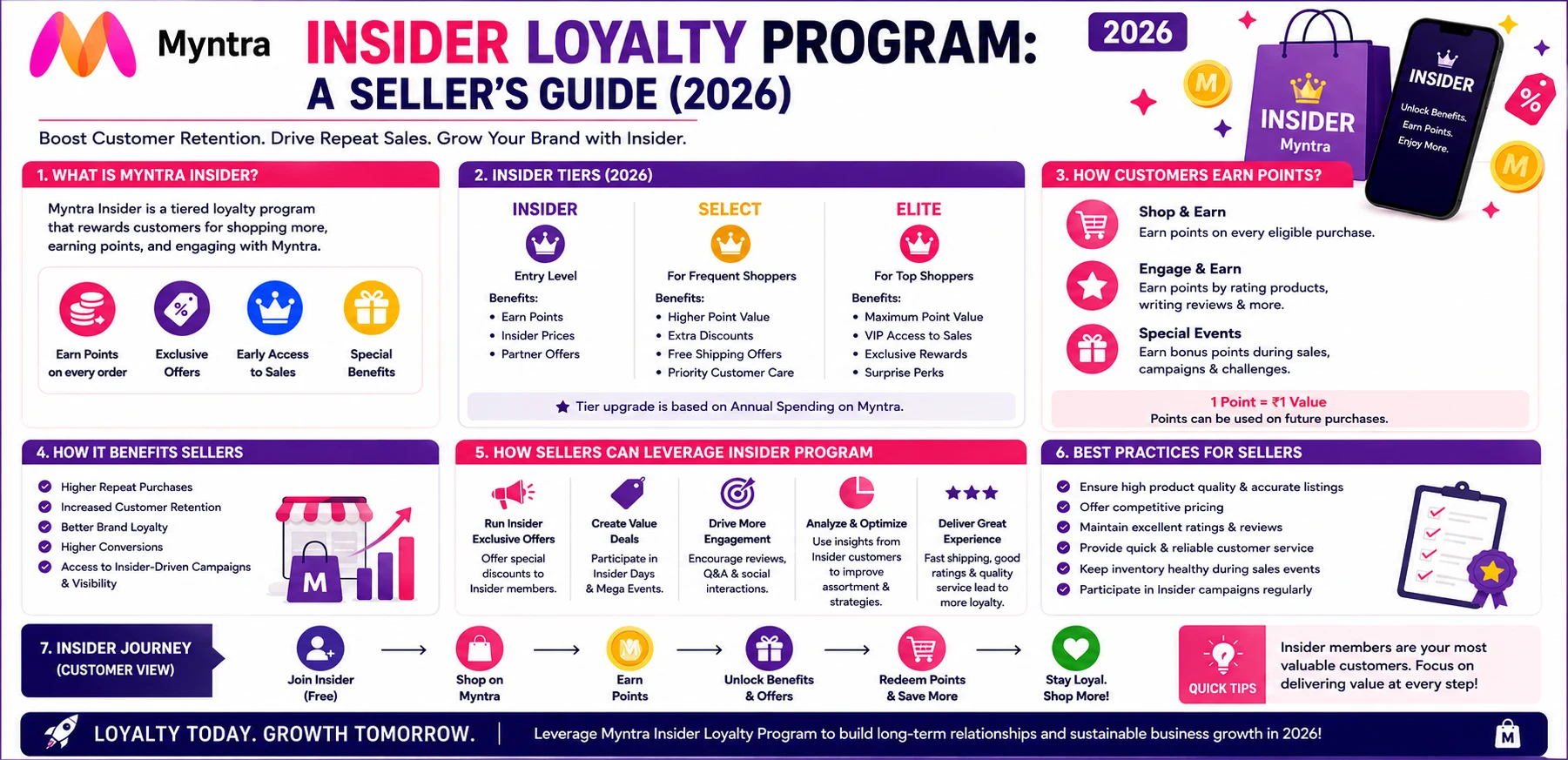
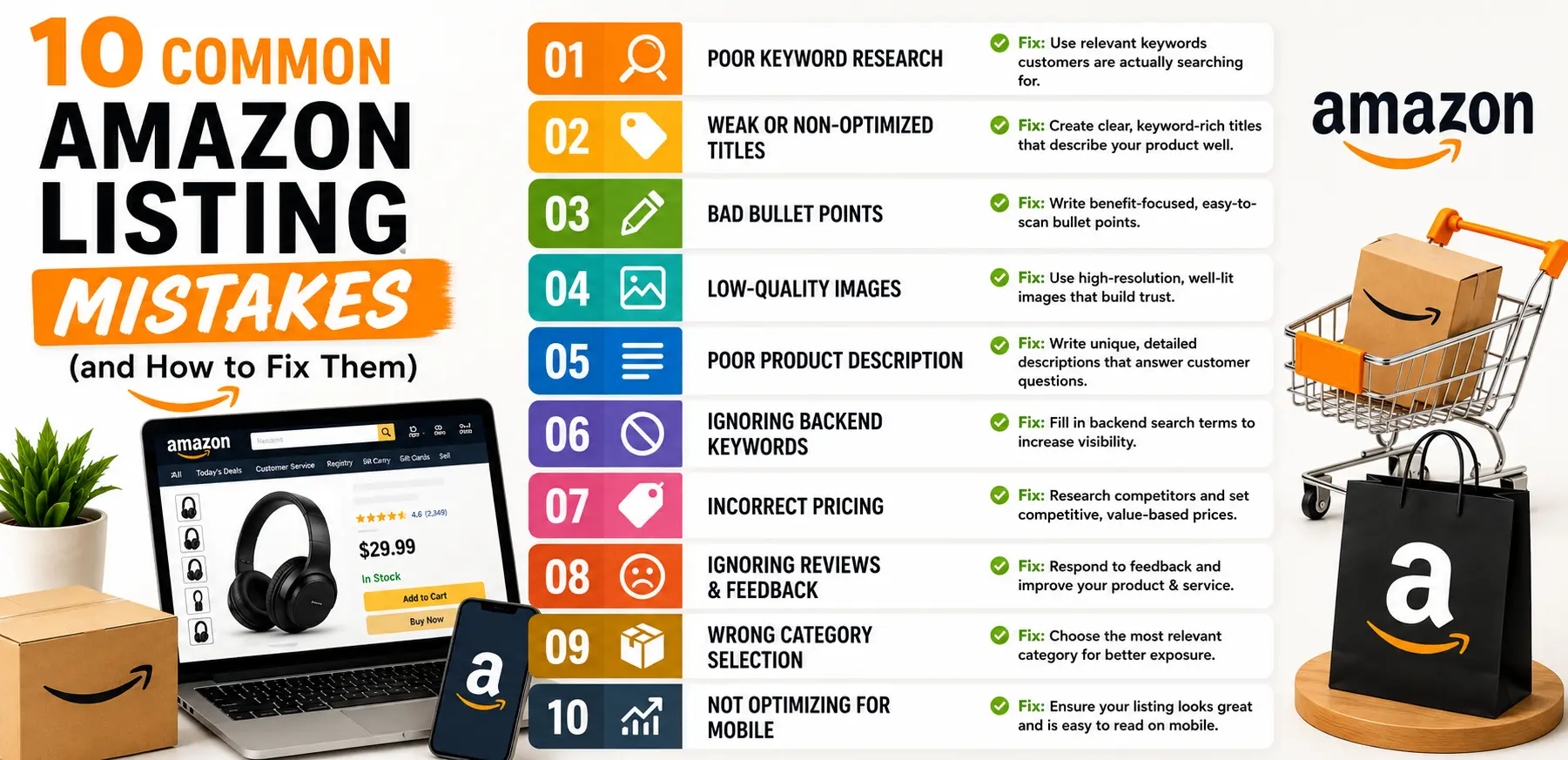
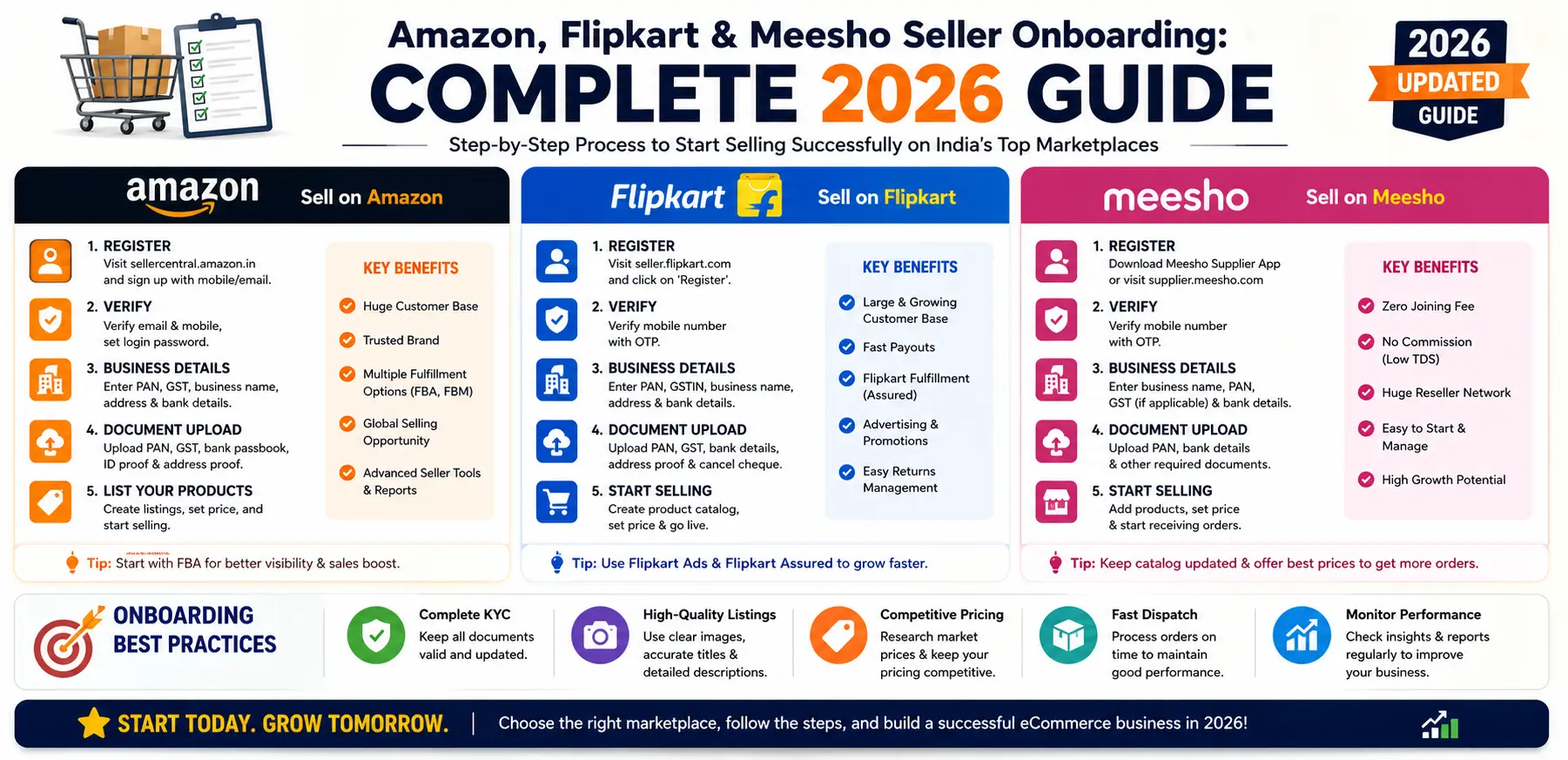
If you sell on Amazon, Flipkart, Walmart, Myntra, or other marketplaces alongside your own website, the same core SEO principles — keyword-rich titles, complete structured content, strong images, genuine reviews — apply there as well, just under each platform’s own ranking algorithm (Amazon’s A9/A10, for example, weighs conversion rate and relevance differently than Google does).
Treating your website and your marketplace storefronts as separate, disconnected efforts is a common and costly mistake. A well-optimized Amazon product listing or Flipkart listing benefits from the same product photography, keyword research, and description quality you’re already investing in for your website — and vice versa.
Common E-Commerce SEO Mistakes
Avoid these at all costs:
- Duplicate product descriptions
- Indexing filter URLs
- Ignoring site speed
- No internal linking
- Poor mobile experience
- No SEO strategy for categories
- Depending only on ads
- Skipping structured data entirely
Fixing even a few of these alone can meaningfully improve rankings within a quarter.
How Long Does E-Commerce SEO Take to Show Results?
SEO is not instant, but it is predictable.
Typical timeline:
- 1-2 months: technical & structure improvements
- 3-4 months: keyword movement
- 6+ months: consistent traffic & sales growth
E-commerce SEO is a long-term asset, not a quick hack — and stores that treat it as a one-time project rather than an ongoing discipline tend to lose the gains they made within a year.
Should You Hire an E-Commerce SEO Expert?
If your store has hundreds of products, multiple categories, unresolved technical issues, or poor conversions despite decent traffic — professional SEO support is worth it.
SEO mistakes in e-commerce are expensive and slow to fix later, especially once they’ve been baked into a site’s structure for months.
Final Thoughts
Good e-commerce website SEO isn’t a single fix — it’s the combination of clean technical foundations, category and product pages built for both users and search engines, structured data that helps Google understand your catalog, and content that actually points back to what you sell. The stores that keep growing traffic long after the initial setup work is done are the ones treating all of this — website, photography, reviews, and even marketplace listings — as one connected system rather than separate checkboxes.
If you’re building or rebuilding a store and want SEO baked into the foundation rather than patched on afterward, Sell Technical handles website development, SEO & SMO optimization, product photography, and marketplace account management end to end. Book a free consultation → or call +91 8882080135.
Frequently Asked Questions
What is e-commerce SEO?
E-commerce SEO is the process of optimizing online stores to rank product and category pages higher in search engines and generate organic sales.
Is SEO important for e-commerce websites?
Yes. SEO provides long-term, high-intent traffic and reduces dependency on paid advertising.
How is e-commerce SEO different from normal SEO?
E-commerce SEO focuses on products, categories, technical performance, and transactional keywords rather than just content.
How long does e-commerce SEO take?
Most e-commerce websites start seeing measurable results in 3-6 months, depending on competition and implementation quality.
Which pages should be optimized first?
Category pages and top-selling product pages should be prioritized first.
Does page speed affect e-commerce SEO?
Yes. Slow websites rank lower and have higher cart abandonment rates.
Does schema markup actually make a difference?
Yes — Product, Review, and Breadcrumb schema can directly improve click-through rate by making your listing more informative in search results, even before someone clicks.
Do I need local SEO if I only sell online?
Only if you have a physical location, showroom, or pickup point — otherwise your effort is better spent on product and category page SEO.
Can SEO increase e-commerce sales?
Yes. SEO brings high-intent users who are actively searching to buy products.