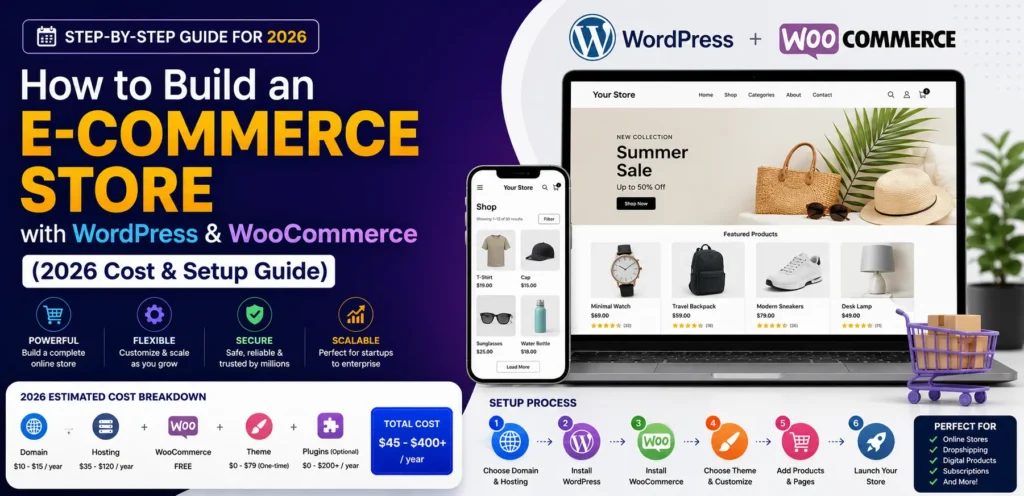
How to Build an E-Commerce Store with WordPress & WooCommerce (2026 Cost & Setup Guide)
WordPress powers a huge share of the internet, while WooCommerce is a leading eCommerce platform, powering around one-third of online stores worldwide……….
WordPress powers a huge share of the internet, while WooCommerce is a leading eCommerce platform, powering around one-third of online stores worldwide……….
Shopify Monthly Cost Breakdown: Apps, Plans & Hidden Charges (India) Introduction When businesses choose Shopify, most only look at the plan price.What they often miss is the actual monthly running cost of a Shopify store – which includes apps, transaction fees, add-ons, and hidden charges. So the real question is not: “What is Shopify’s plan price?” But: “How much does a Shopify store actually cost per month in India?” This guide gives you a clear, honest Shopify monthly cost breakdown, so you can budget correctly and avoid surprises later. What Is Shopify Monthly Cost? Shopify monthly cost refers to the recurring expenses you pay every month to run and maintain your Shopify store. This includes: Shopify subscription plan App subscriptions Payment gateway charges Optional tools (email, automation, analytics) Maintenance or support (if outsourced) These costs continue even if sales are low, so understanding them upfront is critical. Shopify Plan-Wise Monthly Pricing (India) Shopify offers multiple subscription plans. Prices are charged in USD and converted by your bank. Shopify Plans (Approximate) Basic Shopify – ~$39/monthBest for new or small stores Shopify – ~$105/monthBest for growing brands Advanced Shopify – ~$399/monthBest for high-volume businesses These are fixed monthly charges, regardless of how many orders you get. Shopify App Costs Explained (Biggest Variable) Apps are where Shopify monthly costs increase silently. Most stores require apps for: Reviews COD management Subscriptions Upsells & bundles Marketing automation SEO & performance Typical App Cost Range Free apps: ₹0 Paid apps: ₹500 – ₹5,000 per app/month Many stores use 5–10 apps, which can add: ₹3,000 – ₹15,000+ per month This is why poorly planned Shopify stores feel “expensive”. Payment Gateway & Transaction Fees Shopify does not include payment gateway fees. In India, common gateways include: Razorpay PayU Cashfree Stripe (international) Typical Charges: 1.8% – 2.5% per transaction COD charges may apply separately Additionally: Shopify charges extra transaction fees if you don’t use Shopify Payments (not available in India). This directly affects your profit margins, not just website cost. Domain, Email & Add-On Costs Some costs are small individually but add up monthly or yearly. Common Add-Ons: Domain: ₹800 – ₹1,200/year Business email: ₹150 – ₹300/month Advanced analytics tools: ₹500 – ₹3,000/month Backup & security apps: ₹300 – ₹1,000/month These are often ignored during planning. Hidden Shopify Charges Most Businesses Miss These are not obvious upfront: 1. App Dependency Many features that feel “basic” require paid apps. 2. Currency Conversion Fees International payments involve conversion charges. 3. Scaling Costs As traffic and orders grow: App usage costs increase Advanced plans become necessary 4. Maintenance or Support Cost If you hire external support: ₹3,000 – ₹10,000/month (typical) Real Shopify Monthly Cost Examples (India) Small Store (Starter) Basic Shopify plan 3–4 apps Indian payment gateway ₹4,500 – ₹6,000/month Growing D2C Brand Shopify plan 6–8 apps Marketing & CRO tools ₹8,000 – ₹15,000/month High-Volume Business Advanced Shopify Premium apps Automation & analytics ₹25,000+/month How to Reduce Shopify Monthly Costs (Smartly) You should not cut costs blindly – but you can optimize. Best Practices: Avoid overlapping apps Use native Shopify features first Choose apps with lifetime value Plan SEO during development (reduces paid ads later) Work with experienced developers (less app dependency) Well-built stores cost less to run long term. Is Shopify Monthly Cost Worth It? Shopify is worth the monthly cost if: Your store converts well Your setup is optimized You are serious about scaling You value time & stability over technical micromanagement Most “Shopify is expensive” complaints are actually poor setup issues, not platform issues. Final Takeaway Shopify’s monthly cost is predictable but layered. If you only look at the plan price, you will underestimate your budget.If you plan apps, fees, and scaling properly, Shopify becomes a reliable, ROI-positive platform. The key is planning before building, not fixing later. FAQs – Shopify Monthly Cost in India What is the minimum monthly cost of Shopify in India? For small stores, Shopify monthly cost usually starts around ₹4,500 – ₹6,000 including apps. Are Shopify apps mandatory? No, but most stores need apps for reviews, COD, upsells, and marketing. Does Shopify charge transaction fees in India? Yes. Since Shopify Payments is unavailable in India, additional transaction fees apply. Can I run Shopify without paid apps? Yes, but functionality and growth potential will be limited. Is Shopify monthly cost higher than WooCommerce? Yes, Shopify has higher recurring costs, but lower technical management. Can Shopify monthly costs increase over time? Yes. As stores scale, apps, plans, and features increase costs. Related Posts WooCommerce vs Shopify: Cost, SEO & ROI Comparison WooCommerce vs Shopify: Cost, SEO & ROI Comparison (Which Is… Read More Is Shopify Worth the Cost in India? (Honest Guide) Is Shopify Worth the Cost for Indian Businesses? (Honest Breakdown)… Read More 10 Must-Have Plugins for Every WordPress Website in 2025 10 Must-Have Plugins for Every WordPress Website in 2025 Whether… Read More

Is Shopify Worth the Cost for Indian Businesses? (Honest Breakdown) Introduction Shopify is one of the most widely used e-commerce platforms globally, but Indian business owners often ask a very practical question before choosing it: Is Shopify really worth the cost for Indian businesses? The short answer is: Yes – but only if Shopify is implemented correctly and for the right type of business.This guide breaks down the real costs, benefits, limitations, and ROI of Shopify in India, so you can decide whether it makes business sense for you. What Is Shopify and Why Is It Popular in India? Shopify is a hosted e-commerce platform that allows businesses to create, manage, and scale online stores without worrying about servers, security, or backend infrastructure. In India, Shopify is popular because it offers: Fast store setup Reliable hosting Secure payments Easy scalability International selling capability However, popularity does not automatically mean cost-effectiveness – especially for Indian SMEs. Understanding Shopify Costs for Indian Businesses Before deciding whether Shopify is worth it, you must understand where the money goes. 1. Shopify Monthly Subscription Cost Shopify charges a monthly platform fee: Basic Shopify: ~$39/month Shopify: ~$105/month Advanced Shopify: ~$399/month These costs are fixed and paid directly to Shopify, regardless of sales. 2. Development & Setup Cost (One-Time) For Indian businesses, Shopify website development typically costs: ₹20,000 – ₹40,000 (basic store) ₹40,000 – ₹80,000 (professional store) ₹80,000 – ₹1,50,000+ (custom / scalable store) This depends on design, customization, SEO, and integrations. 3. App & Add-On Costs Most Shopify stores rely on apps for: Reviews Subscriptions COD management Marketing automation Advanced shipping Many apps have monthly fees, which increase operating cost over time. So, Is Shopify Worth the Cost? (Business-by-Business Analysis) Shopify Is Worth the Cost If You Are: 1. A D2C or Brand-Focused Business Shopify excels at branding, design flexibility, and customer experience.If you are building a long-term brand, Shopify offers excellent ROI. 2. Planning to Scale Sales Shopify handles traffic spikes, large catalogs, and high order volumes smoothly — without technical headaches. 3. Running Paid Ads or Influencer Marketing Shopify integrates seamlessly with: Google Ads Facebook & Instagram Influencer funnels A well-built Shopify store converts paid traffic better than most alternatives. 4. Selling Pan-India or Globally Shopify supports international payments, currencies, and shipping — making it ideal for exporters and global D2C brands. Shopify May NOT Be Worth the Cost If You Are: 1. Running a Very Small or Local Business If you sell only a few products locally with minimal marketing, Shopify’s monthly cost may feel unnecessary. 2. Extremely Price-Sensitive Shopify is not the cheapest option long-term due to recurring fees and apps. 3. Need Heavy Backend Customization Some complex business logic may require custom development or alternate platforms. Shopify vs Other Options for Indian Businesses Shopify vs WordPress (WooCommerce) Factor Shopify WooCommerce Setup Speed Very Fast Medium Monthly Fees Yes No Maintenance Included Manual Scalability High Medium–High Ease of Use Very Easy Moderate Shopify is better for ease and scalability.WooCommerce is better for budget control if managed well. ROI Perspective: Why Shopify Often Pays for Itself When implemented professionally, Shopify delivers ROI through: Higher conversion rates Faster checkout Better mobile experience Lower technical maintenance costs Reduced downtime risk Many Indian businesses lose more money from poor websites than from Shopify’s fees. Common Reasons Shopify Feels “Too Expensive” Shopify is often blamed for problems caused by: Poor store setup Too many paid apps Bad theme choices No SEO planning No conversion optimization These are implementation issues, not platform issues. How Indian Businesses Can Reduce Shopify Costs Choose the right plan (don’t overpay initially) Avoid unnecessary apps Use native Shopify features Build SEO during development Focus on conversion-first design Work with experienced Shopify developers Smart planning can significantly improve cost efficiency. Final Verdict: Is Shopify Worth It for Indian Businesses? Yes, Shopify is worth the cost for Indian businesses that are serious about online growth. It may not be the cheapest platform, but it is: Reliable Scalable Conversion-friendly Business-focused If your goal is long-term e-commerce growth, Shopify is an investment – not an expense. FAQs – Is Shopify Worth the Cost in India? Is Shopify expensive for Indian businesses? Shopify is not cheap, but it offers strong value through reliability, scalability, and ease of use. Can small businesses in India use Shopify? Yes, but small businesses should carefully evaluate monthly costs and expected sales volume. Is Shopify better than WordPress for Indian sellers? Shopify is better for ease, scaling, and support. WordPress is better for tight budgets and full control. Does Shopify support Indian payment gateways? Yes. Shopify supports Razorpay, PayU, Cashfree, COD, and other Indian gateways. Can Shopify stores rank on Google? Yes. Shopify supports SEO, but proper optimization during development is critical. Is Shopify good for long-term business growth? Yes. Shopify is built for scaling and supports businesses as they grow nationally and internationally. Related Posts Shopify Website Maintenance Cost in India: Monthly, Yearly & Hidden Expenses Read More WooCommerce vs Shopify: Cost, SEO & ROI Comparison WooCommerce vs Shopify: Cost, SEO & ROI Comparison (Which Is… Read More 10 Must-Have Plugins for Every WordPress Website in 2025 10 Must-Have Plugins for Every WordPress Website in 2025 Whether… Read More
Shopify Website Development Cost in India (2026 Guide) Introduction If you are planning to start or scale an online store, Shopify is one of the most popular platforms used by Indian businesses. One of the first questions business owners ask is: “How much does Shopify website development cost in India?” The answer depends on several factors – including store size, features, customization level, and long-term business goals. This guide breaks down Shopify website development costs in India for 2026, so you can make an informed decision without hidden surprises. What Is Shopify Website Development? Shopify website development involves designing, building, and configuring an online store using Shopify so that businesses can sell products online efficiently. It includes: Store setup Theme customization Product & collection setup Payment gateway integration Shipping configuration Performance and SEO optimization Unlike DIY setups, professional Shopify development focuses on sales performance, scalability, and long-term ROI. Average Shopify Website Development Cost in India (2026) Here is a realistic cost breakdown for Indian businesses: 1. Basic Shopify Store Development ₹20,000 – ₹40,000 Suitable for: Small businesses New startups Limited product catalogs Includes: Shopify account setup Free or basic theme setup Basic product uploads Payment & shipping configuration Mobile responsiveness 2. Standard Shopify Store Development ₹40,000 – ₹80,000 Suitable for: Growing e-commerce businesses D2C brands Businesses running ads Includes: Custom theme customization Optimized product & collection pages Basic SEO setup Speed optimization Conversion-focused layout 3. Advanced / Custom Shopify Store Development ₹80,000 – ₹1,50,000+ Suitable for: Established brands High-volume stores Businesses planning to scale Includes: Custom UI/UX design Advanced functionality App integrations Performance & CRO optimization SEO-friendly architecture Custom sections & features Shopify Subscription Costs (Platform Fees) Apart from development, Shopify charges a monthly subscription fee: Basic Shopify: ~$39/month Shopify: ~$105/month Advanced Shopify: ~$399/month These are paid directly to Shopify and are separate from development costs. Factors That Affect Shopify Website Development Cost in India 1. Number of Products More products require: Better navigation Filter setup Structured collectionsThis increases development time and cost. 2. Theme Customization Level Using a ready-made theme is cheaper. Custom UI/UX design costs more but improves branding and conversions. 3. App Integrations Apps for: Reviews Subscriptions Advanced shipping Marketing automation can increase both development and recurring costs. 4. SEO & Performance Optimization SEO-friendly structure, fast load speed, and mobile optimization add value – and cost – but significantly improve ROI. 5. Custom Features Examples: Multi-vendor functionality Custom checkout flows Advanced pricing rules require custom development. One-Time Cost vs Ongoing Costs in Shopify One-Time Costs: Website design & development Theme customization Initial setup & configuration Ongoing Costs: Shopify subscription Paid apps Maintenance & updates Marketing & SEO Understanding both is essential to avoid budget surprises. Is Shopify Cheaper Than Custom E-Commerce Development? In most cases, yes. Shopify eliminates: Hosting costs Security management Complex backend maintenance For Indian businesses, Shopify offers faster launch, lower initial investment, and easier scaling compared to fully custom-built platforms. Common Mistakes That Increase Shopify Development Cost Starting without a clear product structure Changing requirements mid-project Overusing apps instead of native features Ignoring SEO during development Choosing design over usability Planning correctly can save both time and money. How to Reduce Shopify Website Development Cost (Without Compromising Quality) Finalize product catalog before development Choose scalable themes Avoid unnecessary apps Focus on conversion-first design Work with experienced Shopify developers The cheapest option is rarely the most profitable one. Is Professional Shopify Development Worth the Cost? For businesses serious about growth – absolutely. A professionally developed Shopify store: Converts better Loads faster Ranks higher on Google Scales without technical issues Supports paid ads efficiently Your Shopify store is a sales asset, not just a website. Get an Accurate Shopify Website Cost Estimate Every business is different. The best way to know your exact Shopify website development cost is to evaluate: Your products Your target audience Your growth plan Required features A professional consultation helps avoid unnecessary expenses and ensures long-term success. FAQs – Shopify Website Development Cost in India How much does Shopify website development cost in India? Shopify website development in India typically costs between ₹20,000 to ₹1,50,000+, depending on features, customization, and scale. Is Shopify cheaper than custom website development? Yes. Shopify is generally more affordable because hosting, security, and platform maintenance are included. Are Shopify monthly fees included in development cost? No. Shopify subscription fees are paid separately to Shopify. Can I build a Shopify store myself to save cost? You can, but DIY stores often lack performance, SEO, and conversion optimization needed for business growth. How long does it take to build a Shopify website? Most Shopify websites take 2 to 6 weeks, depending on complexity and revisions. Do Shopify apps increase cost? Yes. Some apps have monthly fees, and complex integrations increase development cost. Is Shopify good for Indian businesses? Yes. Shopify supports Indian payment gateways, shipping integrations, and scalability for growing businesses. Related Posts E-Commerce Website SEO: Complete Guide for Online Stores E-Commerce Website SEO: Complete Guide for Online Stores Introduction Search… Read More 10 Must-Have Plugins for Every WordPress Website in 2025 10 Must-Have Plugins for Every WordPress Website in 2025 Whether… Read More Shopify SEO Optimization for Higher Google Rankings Shopify SEO Optimization for Higher Google Rankings Increasing organic traffic… Read More
Top Trending Products to Sell on Alibaba in 2026 Introduction If you’re planning to start or scale your e-commerce or export business in 2026, Alibaba remains one of the most powerful B2B platforms to reach global buyers. The key to success? Choosing high-demand, low-competition, and profitable products that match current market trends. In this guide, we’ll break down the top trending products to sell on Alibaba in 2026, based on global demand, import/export data, and product innovation trends. Why Alibaba Is Still the #1 Platform for Exporters Alibaba continues to dominate the global B2B marketplace, connecting over 190+ countries and millions of verified buyers. Whether you’re a manufacturer, wholesaler, or trading company, Alibaba offers: Access to international buyers Secure Trade Assurance for payments Advanced product SEO and PPC tools Easy scalability for small and large exporters If you want to expand globally in 2026, the platform offers unmatched visibility and buyer reach. 1. Eco-Friendly and Sustainable Products Sustainability will continue to dominate the 2026 global market. Buyers are shifting toward environmentally conscious products that reduce waste and promote green living. Top Picks: Reusable water bottles and cups Bamboo toothbrushes and kitchenware Biodegradable packaging materials Recycled textile fabrics Solar-powered lights and gadgets Why It Works:Eco-products attract large retail orders from eco-conscious brands in the US, Europe, and Australia. 2. Smart Home and IoT Devices With the rise of AI and home automation, smart devices are among the hottest product categories on Alibaba in 2026. Top Picks: Smart plugs and switches Wi-Fi security cameras Smart door locks Voice assistant-compatible LED lights Robot vacuum cleaners Why It Works:The smart home market is projected to exceed $240 billion by 2026, with strong B2B demand from resellers and dropshippers. 3. Health and Fitness Equipment Post-pandemic health awareness continues to fuel this category. Exporters can target both home fitness users and gyms. Top Picks: Resistance bands and dumbbells Yoga mats and accessories Smart fitness trackers Massage guns Portable treadmills Why It Works:Fitness and recovery products maintain strong repeat order potential, especially in North America and Europe. 4. Automotive Accessories Car ownership is booming in emerging markets, creating a massive opportunity for exporters in 2026. Top Picks: Wireless car chargers Dashboard cameras (dashcams) Seat organizers and covers Tire inflators and jump starters Car cleaning tools and kits Why It Works:The automotive aftermarket is expanding rapidly, especially on Alibaba where small importers buy in bulk. 5. Home & Kitchen Essentials Practical, aesthetic, and space-saving home products never go out of style. In 2026, buyers are looking for modern, minimalist designs. Top Picks: Storage containers and racks Kitchen gadgets and tools Air fryers and blenders Decorative LED lamps Non-stick cookware sets Why It Works:These products sell consistently all year and have high profit margins. 6. Beauty & Personal Care Products Self-care continues to rise as a global trend. Both OEM and private label opportunities exist for exporters in this segment. Top Picks: Facial cleansing brushes Hair care tools and serums Skin-friendly sheet masks Beard grooming kits Nail care tools and UV lamps Why It Works:Beauty products are small, lightweight, and easy to ship internationally – perfect for Alibaba exporters. 7. Pet Supplies Global pet ownership is at an all-time high. Alibaba’s pet supply category has seen a 30% rise in demand year over year. Top Picks: Pet grooming kits Smart feeders and water dispensers Collars, leashes, and harnesses Pet toys and beds Travel carriers Why It Works:Pet owners spend generously, and retailers look for quality suppliers on Alibaba to stock up bulk orders. 8. Consumer Electronics This evergreen category continues to dominate Alibaba’s search trends every year. Top Picks: Wireless earbuds and headphones Power banks and chargers Bluetooth speakers Portable projectors Smartwatches Why It Works:Electronics have strong resale value, and Alibaba’s suppliers often offer customization or private labeling. 9. Fashion & Apparel Fast fashion is evolving into sustainable and functional fashion. Exporters who can adapt to trends can build long-term clients. Top Picks: Streetwear and activewear Organic cotton t-shirts Workwear and uniforms Minimalist jewelry Custom printed clothing Why It Works:With global B2B demand for custom garments, fashion exports remain a profitable category on Alibaba. 10. Renewable Energy Products As countries push for green energy, exporters can tap into this fast-growing niche. Top Picks: Solar panels and inverters Portable solar generators EV charging accessories Wind turbines for small setups Why It Works:Governments and businesses worldwide are investing in renewable technology – making it one of the top B2B trends for 2026. How to Choose the Right Product Before selecting a product to sell on Alibaba in 2026, follow these steps: Analyze global search volume and import data. Choose lightweight, easy-to-ship products. Focus on products with repeat purchase potential. Check Alibaba’s supplier competition level. Validate through Google Trends and buyer feedback. Final Thoughts The Alibaba marketplace in 2026 will continue to reward exporters who stay ahead of trends, optimize listings, and maintain product quality. Whether you specialize in eco-friendly goods, electronics, or lifestyle products, success lies in data-driven product selection and professional account management. Boost Your Alibaba Business with Sell Technical At Sell Technical, we help exporters and suppliers grow faster on Alibaba with: Alibaba Account Setup & Optimization Product Listing & SEO Management Buyer Lead Generation Gold Supplier Management Marketplace Advertising & Analytics Let our experts help you dominate Alibaba in 2026 and beyond. Phone / WhatsApp: +91 88820 80135Email: support@selltechnical.com Related Posts Top Trending Products to Sell on Amazon in 2026 (High-Demand & Profitable Ideas) Read More Alibaba Gold Supplier India: Is It Worth the Investment? Alibaba Gold Supplier India: Is It Worth the Investment? Introduction… Read More Top 10 Mistakes Indian Sellers Make on Alibaba (And How to Avoid Them) Top 10 Mistakes Indian Sellers Make on Alibaba (And How… Read More
Alibaba Gold Supplier India: Is It Worth the Investment? Introduction If you’re an Indian manufacturer or exporter planning to sell on Alibaba, you’ve likely come across the “Gold Supplier” membership option.But is it really worth paying for, or can you succeed with a free Alibaba seller account? This blog explains everything you need to know about Alibaba Gold Supplier membership for Indian sellers — including what it offers, how much it costs, and whether it’s the right investment for your business What Is an Alibaba Gold Supplier? An Alibaba Gold Supplier is a verified seller who pays for premium access and visibility on Alibaba’s global B2B marketplace.Gold Suppliers receive a verified badge, improved search ranking, higher credibility, and priority placement in buyer searches. In short, while free members can list products, Gold Suppliers are promoted and trusted sellers — the ones most global buyers prefer to contact. Why Does Alibaba Offer a Paid Plan? Alibaba’s Gold Supplier plan helps separate genuine exporters from low-quality or inactive sellers.It ensures that only serious, verified businesses with proper documentation appear in top searches. This not only improves buyer confidence but also filters out spam or fake profiles – making Alibaba safer for international trade. Key Benefits of Alibaba Gold Supplier Membership 1. Verified Trust Badge Buyers are more likely to contact verified suppliers. The Gold badge instantly builds trust and helps you stand out in competitive categories. 2. Higher Search Ranking Gold Suppliers appear higher in Alibaba search results, increasing visibility and chances of getting buyer inquiries. 3. More Product Listings Free members have strict listing limits. Gold Suppliers can upload hundreds of products, allowing you to target multiple niches. 4. Access to Trade Assurance Trade Assurance protects both buyers and sellers during transactions. It’s only available for verified and Gold members. 5. Detailed Buyer Analytics You gain insights into who viewed your products, what they searched for, and where your traffic comes from – allowing smarter marketing decisions. 6. Priority in Buyer Inquiries (RFQs) When a buyer posts a Request for Quotation (RFQ), Gold Suppliers are prioritized – giving you first access to new opportunities. Gold Supplier vs Free Member: Key Differences Feature Free Member Gold Supplier Visibility Very Low High Buyer Trust Limited Verified & Trusted Product Listings Up to 50 200+ Trade Assurance Not Available Included Marketing Tools Basic Advanced (Ads, Analytics, RFQs) Verification Optional Mandatory If you’re serious about growing internationally, the free plan is only a short-term solution.For long-term business growth, Gold Supplier membership is a must. Is Alibaba Gold Supplier Worth It for Indian Sellers? Yes – if you are a genuine manufacturer, exporter, or wholesaler. Here’s why: India is among the top 10 supplier countries on Alibaba, and competition is rising daily. Buyers often apply filters to view only verified Gold Suppliers. Most high-value deals happen between verified suppliers and international buyers. If your products have export potential, you can easily recover your investment with a few quality orders. Common Misconceptions About Gold Supplier Accounts 1. “I can get buyers even without paying.” Possible, but rare. Free accounts have low visibility and don’t appear in most searches. 2. “It’s too expensive for small businesses.” Even small exporters have grown rapidly by using the right product keywords and optimizing listings. 3. “I don’t need marketing after becoming Gold Supplier.” The badge helps, but you’ll still need strong product listings, ads, and follow-ups to attract real buyers. How to Maximize ROI from Your Gold Supplier Membership Optimize your product titles and descriptions for keywords. Upload at least 30–50 listings to increase search coverage. Respond to inquiries quickly (within 24 hours). Use Alibaba’s P4P advertising to drive targeted traffic. Keep your storefront active with regular updates and new products. When Should You Upgrade to Gold Supplier? If you already have: Verified business documents (GST, PAN, registration certificate) High-quality product images and specifications Export-ready pricing and MOQ details …then upgrading to a Gold Supplier membership can help you grow faster and reach global buyers instantly. How Sell Technical Helps Indian Sellers Succeed on Alibaba At Sell Technical, we specialize in helping Indian exporters and wholesalers set up, verify, and manage their Alibaba Gold Supplier accounts effectively. Our services include: Alibaba Seller Account Setup & Verification Product Listing Optimization Keyword Research & SEO Alibaba Ads (P4P) Campaigns Monthly Reporting & Lead Management With our expertise, Indian sellers can achieve higher visibility, better rankings, and more qualified leads — making the Gold Supplier investment truly worthwhile. Final Verdict Is Alibaba Gold Supplier India worth it?Absolutely – if you plan to sell globally and want to appear in front of serious buyers. Free accounts may save money, but Gold Supplier membership is the fastest path to credibility, leads, and global exposure.It’s not just a badge – it’s a growth tool. Need Help Getting Started? If you’re ready to set up your Alibaba Gold Supplier account and start receiving international inquiries, our experts at Sell Technical can guide you from start to finish. Contact Us Today:Phone / WhatsApp: +91 88820 80135Email: support@selltechnical.com Related Posts Top 10 Mistakes Indian Sellers Make on Alibaba (And How to Avoid Them) Top 10 Mistakes Indian Sellers Make on Alibaba (And How… Read More How to Start Selling on Alibaba from India in 2025: A Step-by-Step Guide for Exporters How to Start Selling on Alibaba from India in 2025:… Read More Alibaba vs AliExpress: What’s the Difference and Which One Should You Use? Alibaba vs AliExpress: What’s the Difference and Which One Should… Read More

Top 10 Mistakes Indian Sellers Make on Alibaba (And How to Avoid Them) Introduction Selling on Alibaba can open doors to international opportunities for Indian businesses — from manufacturers to wholesalers and exporters. However, many sellers struggle to generate leads, attract serious buyers, or close deals due to common yet avoidable mistakes. In this guide, we’ll uncover the top 10 mistakes Indian sellers make on Alibaba and show you how to avoid them to build a successful, trusted, and profitable online export business. 1. Incomplete or Poorly Verified Seller Profile Many Indian sellers rush through the Alibaba verification process, resulting in low trust levels and fewer buyer inquiries. Buyers prefer verified suppliers who appear professional and authentic. How to Avoid It: Complete all sections of your Alibaba profile. Upload a clear business license, PAN, and GST details. Add a company logo, banner, and factory photos. Consider upgrading to a Gold Supplier Account for higher credibility. 2. Low-Quality Product Listings Your product listings are the first impression buyers get. Using poor-quality photos or generic descriptions can drastically reduce your chances of getting inquiries. How to Avoid It: Use high-resolution product images with proper lighting and angles. Write detailed descriptions covering material, size, MOQ, and delivery time. Include keywords naturally in the title and description for better search ranking. Add certifications or product videos where possible. 3. Ignoring Alibaba SEO Just like Google, Alibaba has its own search algorithm. Many sellers fail to optimize listings for keywords that buyers actually search for. How to Avoid It: Research Alibaba-specific keywords using Alibaba Keyword Tool or Google Keyword Planner. Use targeted phrases in your titles (e.g., “Organic Cotton Bedsheets Manufacturer India”). Keep updating listings regularly to stay active and relevant. 4. Slow Response to Buyer Inquiries Buyers on Alibaba expect quick replies, especially when sourcing from multiple suppliers. Slow responses often lead to missed deals. How to Avoid It: Reply within 12–24 hours to all inquiries. Use Alibaba’s Message Center to manage conversations efficiently. Create predefined response templates for quick communication. 5. Unrealistic Pricing Setting prices too high can drive buyers away, while going too low can make them question your quality. Striking a balance is key. How to Avoid It: Research competitor prices within Alibaba before listing. Mention a negotiable price range or use “FOB Price” options. Highlight any bulk discounts or trade terms clearly. 6. Skipping Trade Assurance Some sellers ignore Alibaba Trade Assurance, not realizing how important it is for buyer trust and safe transactions. How to Avoid It: Always enable Trade Assurance on your listings. Complete your bank and business verification for eligibility. Clearly mention Trade Assurance in your product description. 7. Lack of Professional Communication Unclear or unprofessional communication can lead to misunderstandings and lost deals. Many Indian sellers fail to maintain proper business etiquette in messages. How to Avoid It: Write short, polite, and direct messages. Address buyers professionally (“Dear Mr. John”). Confirm all details – product specs, payment, delivery, and packaging – before shipping. 8. Not Updating Products Regularly Inactive or outdated listings signal to buyers that the supplier might not be reliable. Fresh listings get higher visibility on Alibaba search. How to Avoid It: Add new products or variations every month. Update inventory, pricing, and delivery timelines frequently. Remove discontinued products from your store. 9. Ignoring Product Keywords and Categories Placing products in the wrong category or ignoring proper keywords makes it hard for buyers to find you. How to Avoid It: Choose the most accurate product category. Use relevant search tags and long-tail keywords. Add alternative names or related terms in your description. 10. No Marketing or Promotion Efforts Relying only on organic visibility can limit your reach. Alibaba’s marketplace is competitive, and without promotion, your listings might never reach serious buyers. How to Avoid It: Run Alibaba P4P (Pay for Performance) campaigns. Promote your listings on LinkedIn, Facebook, and WhatsApp B2B groups. Collaborate with professionals like Sell Technical for paid campaigns and account management. Final Thoughts Selling successfully on Alibaba takes more than just uploading products. It’s about building trust, optimizing listings, and staying active. By avoiding these 10 mistakes and following best practices, you can increase visibility, generate more inquiries, and establish a strong export brand globally. Need Help Growing on Alibaba? If you want expert help with Alibaba account setup, optimization, or lead generation, our team at Sell Technical is here to help. We provide: Alibaba Seller Account Setup Product Listing Optimization Ad Campaign Management Trade Assurance Assistance Monthly Reporting & Lead Insights Contact Us: Phone / WhatsApp: +91 88820 80135Email: support@selltechnical.com Related Posts Alibaba Seller Account Setup in India: Step-by-Step Guide Alibaba Seller Account Setup in India: Step-by-Step Guide for 2026… Read More How to Start Selling on Alibaba from India in 2025: A Step-by-Step Guide for Exporters How to Start Selling on Alibaba from India in 2025:… Read More Alibaba vs AliExpress: What’s the Difference and Which One Should You Use? Alibaba vs AliExpress: What’s the Difference and Which One Should… Read More

Alibaba Seller Account Setup in India: Step-by-Step Guide for 2026 Introduction In today’s global eCommerce landscape, Alibaba stands as one of the most powerful B2B platforms connecting Indian manufacturers, wholesalers, and exporters with buyers across the world.If you’re a business owner in India looking to expand internationally, setting up an Alibaba Seller Account is one of the smartest steps you can take. This detailed guide will walk you through the complete Alibaba seller account setup process in India, from eligibility and documentation to optimization tips that help you attract global buyers and increase sales. Why Sell on Alibaba? Before we dive into the setup, let’s understand why thousands of Indian businesses are joining Alibaba every month: Access to millions of global B2B buyers Boost in exports and international visibility Trusted platform with Trade Assurance Cost-effective lead generation compared to trade fairs Customizable storefront and product pages Whether you’re in textiles, machinery, handicrafts, or FMCG, Alibaba provides the infrastructure to help you grow internationally. Step 1: Check Eligibility for Alibaba Seller Account To register as a seller on Alibaba from India, you must: Have a registered business entity (Private Limited, LLP, or Proprietorship) Possess a valid GST number and PAN card Own a registered business email ID and official contact number Be ready with high-quality product images, descriptions, and export pricing If you meet these basic requirements, you’re ready to begin. Step 2: Register on Alibaba.com Visit Alibaba.com and click on “Join Free”. Select “Seller” account type. Enter your email, password, and verification details. Choose India as your business location. Verify your email to activate your account. Step 3: Complete Business Verification Alibaba requires sellers to go through a verification process to ensure authenticity. You’ll need to submit: Company registration certificate Business address proof GST and PAN documents Owner’s ID proof (Passport or Aadhaar) Alibaba’s verification partner will review your application, usually within 2–5 business days. Step 4: Choose the Right Alibaba Membership Plan Alibaba offers two main types of seller accounts: Free Member: Limited visibility, fewer product listings, and minimal buyer reach. Gold Supplier Membership: Paid plan that increases trust and visibility among global buyers. For serious sellers, investing in a Gold Supplier Account is highly recommended. It includes verified badges, higher ranking in search results, and priority in inquiries. Step 5: Set Up Your Seller Profile After verification, set up your Alibaba storefront: Upload your company logo and banner Add a professional business description highlighting your manufacturing capabilities and export experience Specify your key products and certifications Include factory photos, quality control details, and export countries A detailed profile builds trust with international buyers. Step 6: Add and Optimize Product Listings Your product listings decide how many inquiries you receive. Follow these best practices: Use keyword-rich product titles (e.g., “Organic Cotton Bedsheets Manufacturer in India”) Add clear product descriptions with specifications and MOQ Upload high-resolution images from multiple angles Mention competitive FOB prices Add certifications like ISO, CE, or FDA if applicable Optimize listings regularly to rank higher in Alibaba search results. Step 7: Enable Alibaba Trade Assurance Alibaba’s Trade Assurance builds buyer confidence by protecting payments until the order is confirmed.To enable it: Verify your business and bank account Agree to Alibaba’s trade terms Use the Trade Assurance payment option for all orders This feature can significantly increase your order conversion rate. Step 8: Respond to Buyer Inquiries Quickly Alibaba rewards sellers who respond quickly. Aim to reply to every inquiry within 24 hours.Use Alibaba’s built-in Message Center and RFQ (Request for Quotation) tools to interact with potential buyers effectively. Step 9: Promote Your Products After your store is live, start promoting your listings to drive traffic and leads: Run Alibaba Sponsored Ads (P4P) Optimize for Alibaba SEO keywords Use social media to share your Alibaba store link Partner with agencies like Sell Technical for account management and lead generation Step 10: Partner with Experts for Account Management Setting up is just the beginning. To truly grow, you need continuous optimization, SEO, and paid promotion.At Sell Technical, we help Indian exporters and manufacturers set up and manage Alibaba seller accounts to maximize sales and visibility. Our services include: Alibaba Seller Account Setup Product Listing Optimization Ad Campaign Management Trade Assurance Assistance Lead Generation and Reporting Why Choose Sell Technical? We specialize in helping Indian sellers go global through Alibaba and other B2B platforms.Here’s what sets us apart: Experienced team with proven results Transparent monthly reporting End-to-end account setup and support Affordable packages tailored for small and medium businesses Conclusion Setting up an Alibaba Seller Account in India is a powerful way to connect with international buyers and scale your export business.Follow the steps in this guide and optimize your listings regularly to maintain visibility and sales. If you want professional help setting up or managing your account, Sell Technical is here to assist you at every step. Get Started Today Contact us to launch your Alibaba Seller Account and start selling globally. Phone / WhatsApp: +91 88820 80135Email: support@selltechnical.com Related Posts How to Start Selling on Alibaba from India in 2025: A Step-by-Step Guide for Exporters How to Start Selling on Alibaba from India in 2025:… Read More Alibaba vs AliExpress: What’s the Difference and Which One Should You Use? Alibaba vs AliExpress: What’s the Difference and Which One Should… Read More 10 Common Amazon Listing Mistakes (and How to Fix Them) 10 Common Amazon Listing Mistakes (and How to Fix Them)… Read More

Complete Guide to GSTIN & Udyam Registration for Indian e-Commerce Sellers For any online seller in India, having a valid GSTIN (Goods and Services Tax Identification Number) and an Udyam (formerly Udyog Aadhaar) registration is essential – not only for legal compliance but also to unlock benefits like input tax credit and MSME schemes. In this guide, we’ll walk you through the entire process of obtaining your GSTIN & Udyam registration for e-commerce, so you can focus on growing your business. 1. Why GSTIN & Udyam Matter for E-Commerce Sellers GSTIN Benefits: Legally required if annual turnover ≥ ₹20 lakh (₹10 lakh in NE & hill states) Claim input tax credit on purchases Mandatory for listing on marketplaces (Amazon, Flipkart, etc.) Udyam Benefits: MSME status → priority lending, lower interest rates Eligibility for government schemes and subsidies Preferential treatment in tenders and procurements 2. Prerequisites & Documents Checklist Registration Required Documents GSTIN PAN card, Aadhar card, business address proof, bank account details, digital photo Udyam PAN card, Aadhar card, business name, bank account details Tip: Ensure your Aadhar mobile number is active to receive OTPs for both registrations. 3. Step-by-Step GSTIN Registration Visit the GST PortalGo to www.gst.gov.in → Services → Registration → New Registration. Fill Part A Select “Taxpayer” Enter Aadhar details → OTP verification. System generates a Temporary Reference Number (TRN). Complete Part B (within 15 days) Login with TRN Provide business details (name, PAN, address) Upload documents: proof of business registration/constitution, bank statement, photograph. Select e-commerce operator (if you sell via marketplaces). Verification & ARN Submit with DSC (for companies/LLPs) or EVC (for proprietors/partnerships). Receive ARN (Application Reference Number) by email. Go Live Once approved (within 7–10 working days), your 15-digit GSTIN appears in your profile. 4. Step-by-Step Udyam Registration Visit the Udyam PortalGo to udyamregistration.gov.in → For New Entrepreneurs. Enter PAN & Aadhar System auto-fetches name and address. Validate with OTP. Business Details Choose your organization type (Proprietorship, LLP, Pvt Ltd) Describe your main activities and NIC code (select “Retail trade” or “Wholesale trade” for e-commerce). Bank Details & Investment Enter bank account number and IFSC. Declare investment in plant & machinery or equipment (if any). Review & Submit No document upload required. On submission, Udyam Certificate is generated instantly with Udyam Registration Number. 5. Integrating Registrations into Your E-Commerce Workflow Marketplace Onboarding: Add your GSTIN and Udyam registration number in seller profile settings on Amazon, Flipkart, Meesho, etc. Invoicing & Tax Settings: Configure your WooCommerce/Shopify tax settings to apply GST rates automatically. Use plugins (e.g., “WooCommerce GST” or “Easy Invoice”) to generate GST-compliant invoices. Accounting & Compliance: Sync your orders and invoices with accounting software (Zoho Books, Tally) for seamless returns filing. 6. Best Practices & Common Pitfalls Keep Documents Updated: Any change in address or constitution requires amendment applications on both portals. Timely Filings: File your GST returns (GSTR-1, GSTR-3B) monthly or quarterly to avoid penalties. Udyam Renewal: Udyam registration is perpetual but update your details if your turnover or investment brackets change. Professional Help: Consider a CA or GST practitioner if you’re unfamiliar with tax terminology. Conclusion Completing your GSTIN Udyam registration for ecommerce is a straightforward process when you follow the steps above. With both registrations in place, you’ll not only be compliant with Indian regulations but also unlock financial benefits and marketplace opportunities. Ready to get started? Gather your documents and register today to power your online sales!
Flipkart vs Meesho: Which Marketplace Should Your Brand Choose in 2025? Deciding between Flipkart vs Meesho can significantly impact your sales, margins, and long-term growth. Below, we break down each platform’s strengths and drawbacks across key dimensions to help you pick the best Indian marketplace for your brand. 1. Seller Onboarding & Fees Flipkart Registration: Requires GSTIN, bank details, and KYC documents. Commission Structure: 6–20% depending on category (electronics higher, fashion lower). Payout Cycle: Bi-weekly settlements with automatic reverse logistics fee deductions. Meesho Registration: Simplified sign-up via mobile app; GST optional for small sellers. Commission Structure: Flat 12% on all orders (no tiered rates). Payout Cycle: Weekly settlements; instant withdrawals at a small fee. 2. Audience Size & Demographics Metric Flipkart Meesho Monthly Active Users ~450 million ~200 million Tier 2–Tier 4 Reach Strong in metros + urban towns Focused on Tier 2–Tier 4 and rural areas Average Order Value ₹1,200+ ₹550 3. Marketing & Growth Tools Flipkart Growth Suite: Sponsored Products, Smart Ship, Flipkart Ads (search & display within app). Meesho Seller Academy: In-app tutorials, social-commerce kits, Whatsapp broadcast campaigns. Brand Stores: Both platforms allow branded storefronts, but Flipkart’s is more customizable (themes, banners, video embeds). 4. Logistics & Fulfillment Flipkart’s SmartFulfil & eKart Network: Nationwide coverage, COD support, reverse logistics handling. Meesho’s In-House Delivery: Economical last-mile rates, strong in remote areas, but longer delivery times. 5. Customer Experience & Returns Flipkart: 15-day hassle-free returns, prepaid labels, self-service portal. Meesho: 7-day return window, pick-up based on seller location, higher return rates due to price-sensitive audience. 6. Use Cases & Ideal Sellers Feature Flipkart Ideal For Meesho Ideal For Premium & Branded Goods Established brands, high-value SKUs Budget-friendly, high-volume products Niche Categories Electronics, home appliances, fashion Apparel, accessories, home decor Bulk Sellers Sellers with warehousing & logistics capabilities Small retailers, resellers leveraging social selling 7. Implementation Checklist Assess Your SKU Portfolio: High-value vs. budget SKUs—match to platform strengths. Calculate Net Margins: Factor in commissions, fulfilment fees, and return costs. Pilot on Both Platforms: Launch 5–10 SKUs for 4 weeks; compare impressions, conversion rates, and ACOS. Leverage Platform Ads: Test Flipkart Ads for high-margin items; use Meesho’s WhatsApp campaigns for quick social traction. Optimize Based on Data: Shift inventory, adjust pricing, and scale on the platform delivering the best ROAS. By weighing factors like seller fees, audience demographics, marketing tools, and logistics, you’ll be empowered to choose between Flipkart vs Meesho in 2025 with confidence – positioning your brand for maximum reach and profitability.