
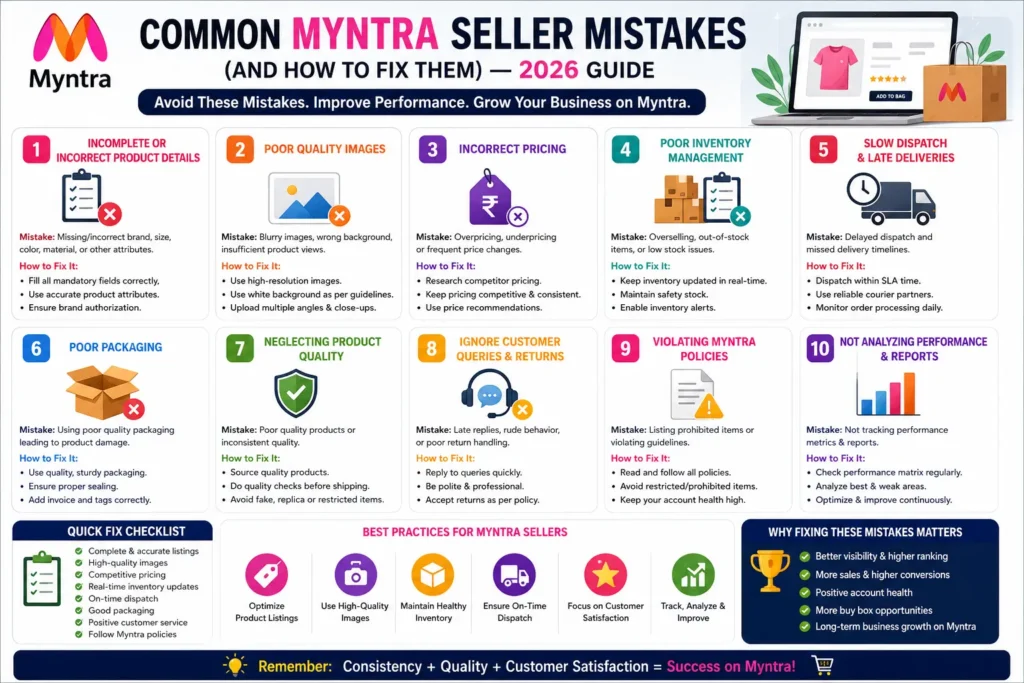
Common Myntra Seller Mistakes (and How to Fix Them) — 2026 Guide
Introduction Selling on Myntra can be genuinely profitable, but it’s also less forgiving than platforms like Amazon or Flipkart when it comes to small operational mistakes. Myntra is a curated, fashion-first marketplace — inconsistent brand details, non-compliant images, or a neglected Q&A section don’t just look sloppy, they actively cost visibility and can trigger account penalties. This guide covers the common Myntra seller mistakes that come up again and again, with practical fixes for each one — and a system for catching them before they compound. Mistake 1: Inconsistent Brand and Business Details The problem: Your brand name, GSTIN, business address, or support contact details don’t match exactly across your Seller Portal, your invoices, and your GST certificate. Even small inconsistencies — an abbreviation here, a missing suffix there — can flag your account during compliance checks. The fix: Do a full details audit in your Seller Dashboard’s business settings and cross-check every field against your official documents. This is worth doing quarterly, not just once at onboarding, since details can drift as your business evolves (a registered address change, an updated GST certificate) without anyone remembering to update the Seller Portal to match. Mistake 2: Non-Compliant Product Images The problem: Images that don’t meet Myntra’s resolution, background, or format requirements are one of the most common causes of listing rejection. Myntra is a highly visual, fashion-focused platform, so image quality gets scrutinized more closely here than on most other marketplaces. The fix: Always check the current Image Guidelines under Seller Resources before a bulk upload — exact resolution and format requirements can change, so relying on guidance from months ago is a real risk. As a general standard: clean white-background main images, genuine lifestyle or model shots as secondary images, and consistent, watermark-free presentation across your whole catalog. A batch editing workflow (rather than manually resizing one image at a time) saves real time once your SKU count grows. Mistake 3: Generic Product Titles and Missing Attributes The problem: Titles like “Shirt Blue” with no brand, material, or fit details get buried in search. Myntra’s discovery relies heavily on structured attributes, not just keyword matching in a title. The fix: Use a consistent title formula — Brand + Product Type + Key Feature + Size/Color — and fill in every attribute field: material, gender, occasion, and care instructions. Incomplete attributes don’t just hurt discoverability; they also make your listing harder for shoppers to trust at a glance, since fashion buyers specifically look for exactly this kind of detail before purchasing something they can’t physically touch. Mistake 4: Poor Inventory and Pricing Discipline The problem: Stock-outs during high-traffic periods and erratic pricing swings both damage seller ratings and buyer trust. On a platform with a heavy promotional calendar (End of Reason Sale, festive drops), being caught unprepared is a recurring, avoidable failure. The fix: Set low-stock alerts well before you actually run out, review inventory reports weekly rather than monthly, and keep pricing changes gradual and defensible rather than reactive. If you’re planning around Myntra’s major sale events, build buffer stock ahead of time instead of scrambling once a sale has already started. Mistake 5: Ignoring Reviews and Customer Questions The problem: Unanswered questions and unaddressed negative reviews quietly erode both your reputation and your click-through rate — shoppers browsing a category page are comparing sellers, and a listing with ignored complaints reads as a red flag. The fix: Check reviews and Q&A on a genuine daily cadence, not sporadically. Respond to negative reviews quickly with a real resolution offer rather than a generic apology, and keep your most common questions answered and visible near the top of the listing so shoppers aren’t left guessing. Mistake 6: Treating Myntra Like a Generic Marketplace The problem: Sellers who’ve succeeded on Amazon or Flipkart sometimes bring the same playbook to Myntra and underperform, because Myntra is curated and visually driven in a way those platforms aren’t. A listing that would pass fine on a general marketplace can look amateurish on a platform where shoppers expect editorial-quality presentation. The fix: Study how established brands present themselves on Myntra specifically — the photography style, the copy tone, the overall visual consistency — and treat your storefront more like a boutique retail presence than a generic product feed. Mistake 7: Spreading Thin Across Every Promotional Event The problem: Sellers who’ve succeeded on Amazon or Flipkart sometimes bring the same playbook to Myntra and underperform, because Myntra is curated and visually driven in a way those platforms aren’t. A listing that would pass fine on a general marketplace can look amateurish on a platform where shoppers expect editorial-quality presentation. The fix: Study how established brands present themselves on Myntra specifically — the photography style, the copy tone, the overall visual consistency — and treat your storefront more like a boutique retail presence than a generic product feed. Mistake 8: Inaccurate or Missing Size Charts The problem: Size mismatch is one of the single biggest drivers of returns in fashion e-commerce, and a generic or missing size chart makes it worse — shoppers guess, guess wrong, and send the item back. Every return costs you both the reverse shipping and a dent in your return-rate metrics. The fix: Build size charts specific to each product type rather than reusing one generic chart across your whole catalog — a fitted shirt and an oversized hoodie shouldn’t share sizing logic. Where possible, include real body measurements alongside size labels (S/M/L), since labels alone vary meaningfully between brands and confuse shoppers comparing options. Mistake 9: Slow Order Dispatch The problem: Delayed dispatch doesn’t just risk missing SLA windows — it directly affects account health scoring, and repeated delays quietly push your listings down in search ranking regardless of how good the listing itself is. The fix: Treat dispatch time as a core operational metric, not an afterthought. If delays are a recurring pattern rather than an occasional exception, the fix is usually process, not effort — batching fulfillment at